> For the complete documentation index, see [llms.txt](https://docs.pushpushgo.company/llms.txt). Markdown versions of documentation pages are available by appending `.md` to page URLs; this page is available as [Markdown](https://docs.pushpushgo.company/web-push/integration-script/google-analytics-and-google-tag-manager.md).
# Google Analytics & Google Tag Manager
Using these options, you can send more advanced information to your Google Analytics dashboard or capture it through Data Layer. This data includes:
* how many people clicked "Allow" in the signup form
* how many people clicked block in the signup form
* how many people closed the signup form
* how many people clicked "Allow" in the inbox
* how many people unsubscribed from the inbox
* how many people clicked the bell widget
You can find more information about Events in Google Analytics[ here](https://developers.google.com/analytics/devguides/collection/analyticsjs/events?hl=en).
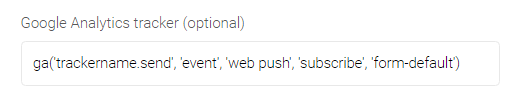
If you are using several trackers in your Analytics, you can, in the field next to the checkbox, provide the name of the tracker to which events are to be sent. By specifying the name of the tracker, events will be sent as follows: